


The deposit's in the bank. That's when the real work starts.
You've just signed a job worth £400k. The deposit's landed, the client's happy, you're happy, everyone's shaking hands. Then the phone starts ringing: the architect wants a start date, the client wants diggers on site by Monday, and your site manager is still waiting on a drawing pack that isn't even finished.
This is the moment that makes or breaks a job between £200k and £1m. Rush it and you'll spend the next six months reacting to problems instead of running the project. A properly built construction programme is what stops that happening. It isn't a Gantt chart for the office wall. It's the thing that tells you when money lands, when you pay your trades, and where the risk sits before it turns into a problem.
Get the programme wrong at the start and everything downstream suffers: cash flow gaps, trades standing around waiting for information, margin bleeding away on rework nobody budgeted for. Get it right and you've got a repeatable way of running jobs that lets you take on bigger contracts without the stress scaling up alongside them.
This is exactly what we work through with builders turning over £750k to £5m who want the next job to run cleaner than the last one.
Plan before anyone touches a spade
The contract's signed. That doesn't mean work starts tomorrow. Too many builders treat the signature as the starting gun and spend week three discovering a problem that should have been flagged in week one.
Site survey and utilities
Before you order a single brick, get a proper site survey done. This is where you find the access route that's two metres narrower than the drawings suggest, or the drain run nobody mentioned at tender stage.
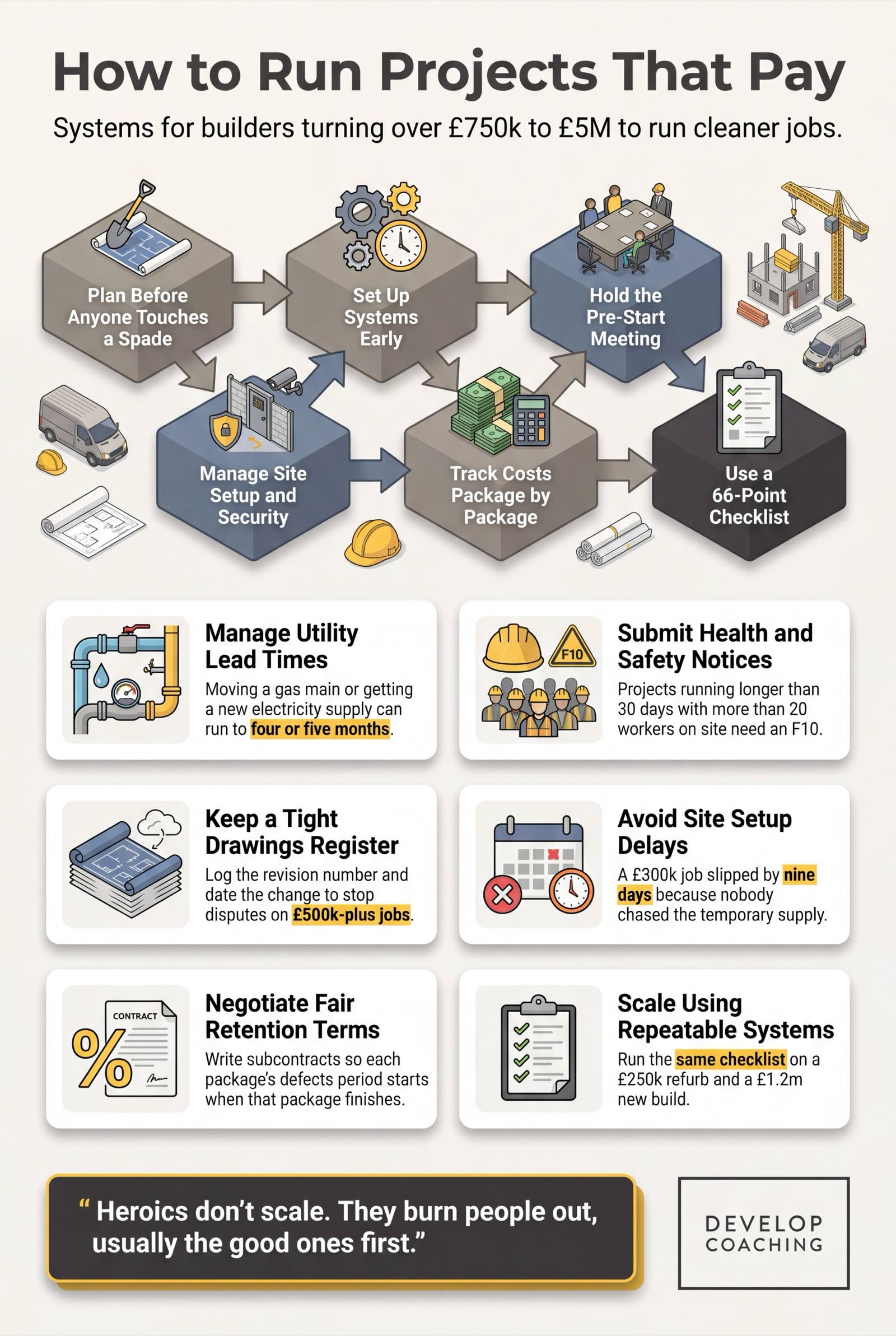
Utilities are the sleeper issue. Moving a gas main or getting a new electricity supply connected isn't a two-week job: it can run to four or five months depending on the network operator's backlog. Wait until the client's chasing you for a start date before you ring the DNO and you've already lost the best part of a quarter. Build those lead times into your construction programme from day one, because no amount of good intentions on site will speed up a utility company's queue.
Health and safety notices
Compliance isn't optional and it isn't negotiable either. Projects running longer than 30 days with more than 20 workers on site, or any job over 500 person-days, need an F10 submitted to the HSE before work starts. Miss it and you're exposed to fines that dwarf anything you'd save by rushing. File it, then file it again if the project changes shape. It takes an afternoon. A stop-work order doesn't.
Permissions and permits
Don't mobilise until planning permission, building regs sign-off and every relevant permit is sat in a folder, signed and dated. If a delay happens because you jumped the gun, the client will still blame you, even when the hold-up was theirs. Get the paperwork nailed down first. It's the cheapest insurance you'll ever buy.
Keep your drawings register tighter than your bank account
Here's a scenario that plays out on sites every week: the brickwork gang is working from Revision B, the architect issued Revision C nine days ago, and now there's a wall in the wrong place that someone has to pay to put right.
A drawings register stops this. Keep it live, on site, and updated digitally the same day a revision lands. Every time a new drawing comes in:
- Log the revision number
- Date the change
- Get it to everyone who needs it that day, not at the next site meeting
- Pull the old version so nobody can claim they were still working to it
It sounds basic. It's also the single biggest source of disputes we see on £500k-plus jobs, and it costs nothing to fix.
Set your systems up before the first brick goes down
You can't run a £600k contract off a spreadsheet three people are editing at once, half of them on the wrong version. By the time the numbers look wrong, the damage is already done.
Whatever platform you use, whether that's a dedicated construction management package or something you've built yourself, set the project structure up before anyone's on site: budget lines in, linked to Xero or QuickBooks, from day one.
Leave it until week four and you'll spend the rest of the job catching up on data entry instead of using the numbers to make decisions. A system that's live from the start gives you visibility on cash and variances while there's still time to do something about them, not three months later when the hole's already dug.
The pre-start meeting nobody wants to schedule
Sales teams hand projects to delivery teams by email half the time, and something always gets lost. The client was promised a particular finish verbally, nobody wrote it down, and now there's an argument in month four.
Put the client, your sales lead and your project manager in the same room before anything starts on site. This meeting does three things:
- Hands the project over properly: whatever was promised on the sales call makes it into the plan, not lost in a string of email threads.
- Walks through the programme: when you start on site, when the big milestones land, and when the client needs to make decisions by.
- Pins down what the client owes you: kitchen choice, bathroom fittings, whatever's theirs to decide. Get it agreed before the build starts, not three weeks into first fix.
Do this and the client relaxes. It tells them you're organised and in control before you've laid a block. It's also the difference between a client who trusts your process and one who's on the phone every other day chasing an update. We go into this in more depth in Attract the Right Construction Clients: professionalism is what separates the clients paying proper rates from the ones shopping on price.
Site setup and security
Fencing, barriers, a clear route in and out for deliveries. Keep anyone who shouldn't be there off the site, and if it's a busy site with footfall nearby, run a sign-in book or a proper access system.
Temporary water, temporary power, a site office that actually has electricity in it: sort these weeks before you need them, not the Monday your bricklayers are due. We've seen a £300k job slip by nine days because nobody chased the temporary supply until the groundworker was already stood down waiting for it. That's a fortnight of overheads for nothing.
Contract terms that catch builders out
Bigger contracts come with bigger traps, and you need to spot them at tender stage, not three invoices into the job. We cover this properly in How to Win Construction Contracts Without Cutting Price, but retention is worth flagging on its own.
Standard contracts often tie retention release to the end of the whole project's defects period. Fine if you're the main contractor running the full three years. Not fine if you're a groundworker who finished your package in month two and now has to wait until year three for the last 2.5% of your money.
Write subcontracts so each package's defects period starts when that package finishes, not when the whole job does. It's a small clause. It stops a cash flow argument with your supply chain eighteen months down the line, and it keeps good subbies willing to work with you again.
Know your numbers package by package
A construction programme that doesn't feed into your financial forecasting is just a wall chart. You need Cost Value Reconciliation, tracked by package, not as one number for the whole job.
Break it down:
- Foundations: running under budget or over?
- Brickwork: on track?
- M&E: where's that sitting against the original allowance?
That level of detail tells you exactly where the problem is before it eats the whole job's margin. And build your cash flow forecast off the actual programme, not a guess. If groundworks run four weeks and your groundworker's invoicing at the halfway point and on completion, model those two payments against what the client's due to pay you in the same window. Do that and you'll know in month five whether the bank balance is tight before it actually gets tight, which is the only time that information is any use to you. There's more on this in Construction Cash Flow Management Past £1M.
Build a checklist and stop relying on memory
You can't scale past £5m on heroics. Heroics don't scale. They burn people out, usually the good ones first.
We use a 66-point checklist with the builders we work with, covering everything from the site survey and utility lead times through to the drawings register and site security. Strip out what doesn't apply to a particular job type, but keep the bones of it. Run the same checklist on a £250k refurb and a £1.2m new build and you get the same outcome: nothing critical gets missed, and your site managers aren't relying on remembering what they did last time. That consistency is what lets you hand site setup to someone else and trust it'll be done properly, which is the whole idea behind Construction Business Systems That Run Without You.
Winning the next client with your programme, not your price
Jobs worth between £200k and £1m don't go to the cheapest tender half as often as builders think. They go to the contractor who looks like they've already thought the job through.
Show the client how you'll manage it before you've even won it: your communication routine, the software you run it on, the specific pitfalls of their build type and how you've planned around them. That's not padding out a proposal. That's the thing that moves the conversation off price and onto value. Clients pay more for a builder who's already solved problems they haven't thought of yet. We go into how that shapes your wider positioning in How to Master Construction Business Marketing in 2025.
From programme to profit
A construction programme isn't a schedule you build once and forget about. It's the thing that keeps your operations, your finances and your client's expectations pointed in the same direction. Get it right and you stop chasing trades for answers, you catch cash flow problems while there's still time to fix them, and you hand projects over on time without the usual scramble at the end.
It also gives you something more valuable than any single job: the confidence to turn down the client who's going to be a nightmare, because you know exactly what a well-run job costs you in time and attention, and you can spot the one that won't pay for itself.
If you want help building this into how your business runs, that's exactly what we do. Our eight-week course walks construction company owners through the planning phase, contract negotiation and programme management step by step, so you're not guessing your way through the next £500k job. If you're turning over £750k to £5m and want a clear route to running bigger contracts without the chaos, get in touch and we'll talk you through how the mastermind works.