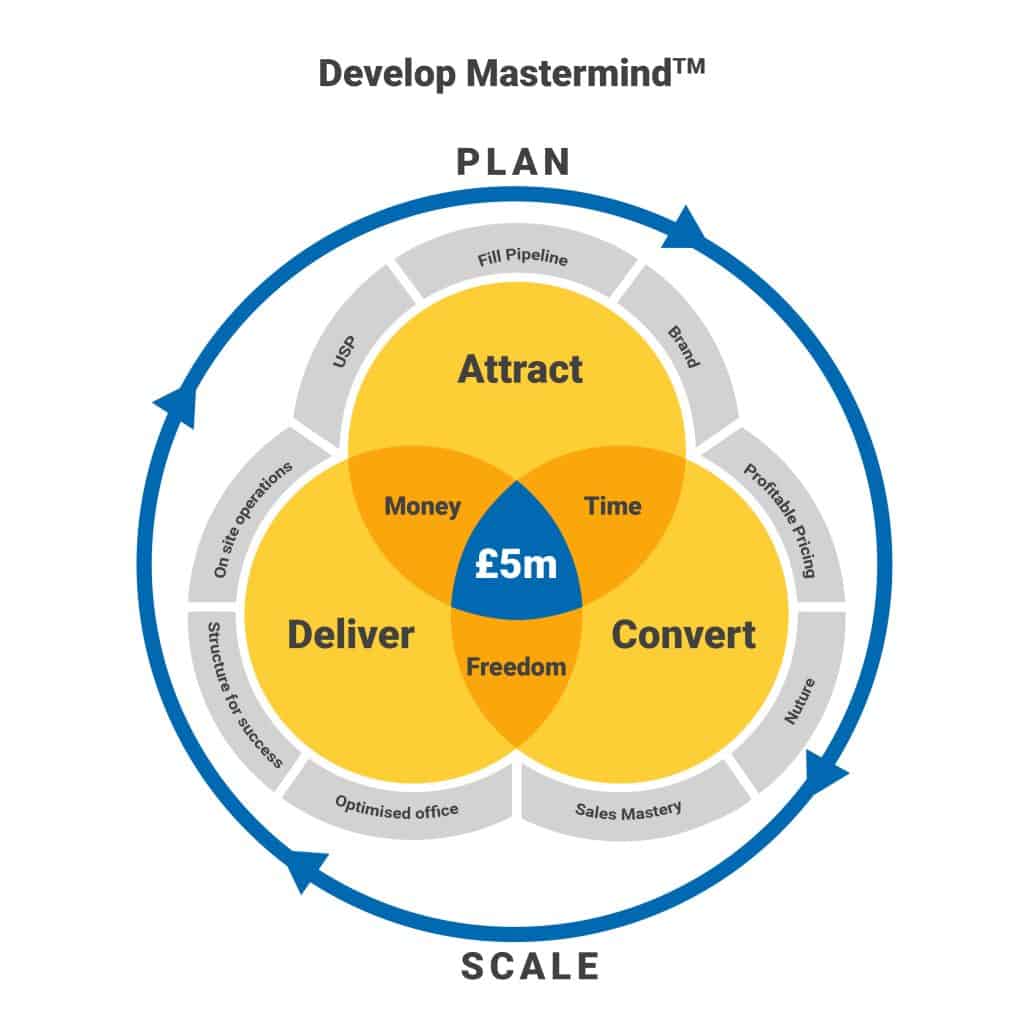

You’ve built something solid. Good reputation, reliable team, quality work. And you’ve crossed the £1M turnover mark, which most builders never do. Now you want to get to £5M.
Here’s the thing that separates the builders who scale from the ones who stall: revenue is vanity, profit is sanity, but cash is king. Most people nod along to that and then carry on running their business like it doesn’t apply to them.
It does apply. Especially once you’re past £1M.
If your business is turning over £1M or more, your biggest threat isn’t a lack of work. It’s construction cash flow management. You can go broke whilst being profitable. You can have £600k of work in the pipeline, strong margins on paper, and still struggle to pay your staff on Friday because the money is tied up in debtors who pay when they feel like it.
More revenue doesn’t mean more cash. A £500k contract means nothing if payment is delayed by 60 days and your material bills land in week three. Profit is an opinion. Cash is a fact.
This article isn’t for start-ups or sole traders. It’s for the £1M+ operator who wants to stop firefighting and start scaling with actual control over the numbers. We’ll cut the accounting jargon and look at the practical systems that keep a growing construction business breathing.
Why Cash Flow is the Oxygen of Your Business
You understand load-bearing walls, foundations, structural integrity. But too many directors treat their finances as an afterthought. They check the P&L, see profit, and feel safe. That’s a dangerous place to be.
Cash flow is the oxygen of your business. You can be profitable on paper and still die for lack of it.
When you scale from £1M to £5M, cash flow complexity doesn’t grow linearly. It multiplies. You’re running multiple sites, placing larger material orders, carrying more staff on the payroll. The gap between spending money and receiving it widens substantially. If you haven’t built a rigorous system before scaling up, you’ll find yourself constantly borrowing to pay for work you’ve already done and delivered.
The reason 90% of construction businesses never grow past £1M comes down to a handful of repeated mistakes, and poor construction cash flow management is consistently top of the list. You can’t build a bigger business on a cracked foundation. To fix this, you need to stop reacting to your bank balance and start forecasting with intent. That discipline is the backbone of the Accounting for Construction Companies approach that underpins sustainable growth.
The 90-Day Cash Flow Forecast: Your Core Framework
The single most effective tool I use with coaching clients is the 90-day cash flow forecast. It’s simple, it’s honest, and it works.
Annual forecasts are too vague. By the time they’re wrong, it’s too late to do anything about it. Monthly snapshots miss the week-by-week reality of construction payments. Ninety days hits the sweet spot: long enough to spot trends and plan for the quiet months, short enough to stay accurate and actually usable.
Here’s exactly how to build it.
Step 1: Start With Your Actual Cash Balance
Look at your bank account right now. Not the figure in Xero or QuickBooks that might be two weeks behind on reconciliation. The actual number sitting in the bank today. That’s your starting point. If it’s £45k, that’s your reality. Don’t pretend you have more just because the P&L looks healthy.
Step 2: Map Every Inflow for the Next 90 Days
List every payment expected to land in your account over the next 12 weeks. Include:
- Deposits on new contracts
- Progress payments linked to project milestones
- Retention releases
- Any other income
Write down the exact date you expect each payment to arrive. Don’t use averages or best-case scenarios. If a client typically pays in 45 days, plot 45 days out. If there’s any chance they’ll be late, assume they will be. You’re building a conservative picture, not an optimistic one.
Step 3: Map Every Outflow for the Next 90 Days
Now list every penny leaving the business. This is where most builders go soft. Don’t. Be ruthless.
- Wages, national insurance and pension contributions
- Subcontractor payments
- Materials
- Plant hire
- Overheads: insurance, software, rent, utilities
- Tax liabilities including VAT and corporation tax instalments
If you’re planning to buy a new van or a piece of plant next quarter, put it in. If you’re expecting a bonus, leave it out until it’s physically in your account. Don’t mix hope with planning.
Step 4: Build a Simple Spreadsheet
You don’t need specialist software for this. A basic spreadsheet does the job. Column A is the date. Column B is the inflow. Column C is the outflow. Column D is the running balance.
Update it every week without fail. Xero and QuickBooks can support the reporting side, but the logic and the judgement have to come from you. The goal is to see your projected cash position at the end of every week for the next 12 weeks. That’s it. No more, no less.
Step 5: Find the Gaps Before They Find You
Look at your spreadsheet. Where does the running balance dip into the red? That’s your danger zone.
If you can see a shortfall in week seven, you’ve got six weeks to act. You can invoice earlier. You can renegotiate supplier terms. You can arrange an overdraft facility while you’re in a strong position, not in desperation when the bank holds all the leverage. You can delay a capital purchase by a month.
This is the whole point. A proper cash flow forecast doesn’t just tell you where you are. It tells you where you’re heading, with enough time to change course. That’s what makes it indispensable for How to Scale Your Construction Business without ending up pinned against your overdraft limit every other month.
The Finance and Cash Flow System
Forecasting shows you where you’re going. The Finance and Cash Flow System is what keeps you there. The forecast is the map. This is the engine. Without these disciplines in place, the forecast is just a document you update and quietly ignore.
Clear Invoicing With Defined Payment Terms
Ambiguity costs you money. Every invoice you send must state exactly when payment is due. Not “payment due promptly” or “as agreed.” Use plain language: “Payment due within 14 days of invoice date.” That’s it.
Clear terms reduce disputes. They give you a contractual basis to chase when a client ignores the deadline. And clients who know the exact due date are more likely to meet it, or at least less likely to claim they didn’t realise payment was expected.
Milestone-Based Progress Payments
Waiting until the end of a month or the completion of a project stage to invoice is one of the most common and costly habits in construction. It creates enormous cash flow gaps that you end up funding yourself.
Every contract should have defined milestones with payment triggers attached to each one. When the slab is poured, the invoice goes out. When the frame is up, the invoice goes out. Your client knows from day one when they’ll be billed and for how much. No surprises for them, no cash gaps for you.
If you’re still running projects on traditional JCT contracts without tight milestone definitions, you’re giving your client an interest-free credit facility and calling it a contract. Tighten your terms. The moment a milestone is hit, raise the invoice the same day, not at the end of the week when someone gets round to it.
Weekly Cash Reviews, Non-Negotiable
Pick a day and protect it. Every Monday morning, or the first working day of the week, open the forecast, update the numbers, and check the position for the next four weeks. If you have a bookkeeper or finance manager, this is a 30-minute conversation. If it’s just you, block it in the diary and treat it as fixed.
A business turning over £1M or more with no regular cash review is flying blind. Track your net cash position every week. Know what’s coming in, know what’s going out, and know the difference between the two.
Stop Accepting 60-Day Terms as Standard
Clients will push for 30, 60, even 90-day payment terms. They’ll tell you it’s standard practice. Sometimes it is. That doesn’t mean you have to accept it.
If a client insists on 60-day terms, you’re lending them money for two months, interest free. Price that cost into the quote. Work out what a short-term credit facility would cost to bridge that gap and add it to the figure. Or decline the work. There are plenty of clients who’ll pay within 14 days if you build it into the contract from the start and hold the line on it.
The Pricing Rule That Underpins Cash Health
You can’t manage cash flow if you’re underpricing your work. The two are directly connected. Win jobs on thin margins and you’ll always be short of cash to deliver them, because there’s no buffer when things go wrong.
And things always go wrong. Materials go up. A labourer quits mid-project. The groundworks take three days longer than quoted. That’s construction. Your margin is what absorbs it.
If you’re not making at least 20% gross profit on each project, you’re underpricing. Ideally you want 30% or above. At 20% gross margin, a 10% spike in material costs knocks a third of your profit out. At 5% gross margin, it wipes you out entirely and destroys the cash position on that job before it’s finished.
The businesses that scale past £3M aren’t necessarily winning bigger jobs. They’re pricing properly and protecting their margins even when clients push back. Read Pricing Construction Jobs for Profit to make sure every job is contributing to your cash reserve, not just your revenue number.
When you price correctly, you have options. You can afford to wait 30 days for a client to pay. You can offer slightly more flexible terms to a client you want to keep long term. You have breathing room. When you’re priced thin, every delayed payment is a crisis. For a detailed breakdown of setting the right price point, see How to Price Construction Work. It’s not about being the most expensive. It’s about being profitable.
The Cash Flow Traps That Catch £1M+ Businesses
As you grow, new problems emerge that wouldn’t have existed at lower turnover. Here are the three that trip up the most builders I work with.
Ignoring Retention in Your Forecast
Retention is typically 5% of the contract value, held back until practical completion, with half of that often retained for a further 12 months. On a £400k job, that’s £20k you won’t see for over a year.
Many builders invoice the milestone and count the full amount as income. They shouldn’t. The retention portion isn’t income yet. It’s a loan to your client. If you don’t strip it out of your forecast, you’ll consistently overestimate your available cash and be genuinely confused when the balance doesn’t match your expectations.
Track retention separately. Forecast it as a future inflow at the correct date. Don’t rely on it for current operations.
Scaling Revenue Without Funding the Working Capital
Growth consumes cash before it generates it. When you take on a £1.2M project for the first time, you’re ordering materials and paying subcontractors before you’ve raised a single invoice. That gap between spending and receiving can run to £80k or £100k on a job of that size.
If you scale revenue by 40% in a year without ensuring the cash is there to fund the increased working capital, you’ll break. Not because the work isn’t there. Because you can’t finance your own growth. It’s one of the most common failure points detailed in 7 Mistakes When Scaling a Construction Business Past £1M.
Blurring Personal and Business Money
If you’re drawing from the business account without a clear salary or dividend structure, you don’t actually know what cash is available for the business. You think you do. But you don’t.
Pay yourself a consistent monthly salary and treat it as a fixed cost in the forecast. When you take a dividend, it comes from retained profit, not from the working capital. These are two completely different pots. Mix them and your cash forecast becomes fiction. Decisions made on fictional data will cost you, usually at the worst possible moment.
Your Seven-Day Action Plan
Reading this changes nothing. Implementing it changes everything. Here’s what to do this week.
- Day 1: Build the 90-day forecast. Open a spreadsheet. Put in your current bank balance. List every known inflow and outflow for the next 12 weeks. Where you don’t know a figure, estimate it, flag it, and come back to it. Don’t let uncertainty stop you starting.
- Day 2: Review your pricing. Pull up your last five completed projects. Did each one make 20% gross profit or better? If not, your pricing model needs fixing. How to Grow Your Construction Company Profit Margin gives you the specific tactics to close the gap.
- Day 3: Audit your invoices. Check your last ten invoices. Do they all have clear payment terms? Were they raised immediately on milestone completion, or a week later when someone got round to it? Fix the process, not just the individual invoices.
- Day 4: Speak to your current clients. Confirm the milestone dates on every active project. Make sure each client knows when invoices will be raised and exactly when payment is due. If they’re surprised by this conversation, that’s telling you something.
- Day 5: Set up a weekly cash review. Every Monday morning, 30 minutes, update the forecast. This isn’t optional. This is the meeting that keeps everything else on track.
Do these five things and you’ll move from reacting to your bank balance to controlling it. You’ll stop being surprised. You’ll make decisions based on cash reality, not on what you hope is coming in.
Cash is Control
Scaling from £1M to £5M isn’t just about winning more work. It’s about managing the money that comes from that work with the same discipline and rigour you bring to site.
Construction cash flow management isn’t an accounting task you hand off to your bookkeeper. It’s a leadership responsibility. It takes discipline, honesty, and a willingness to make difficult calls. Turn down clients who won’t commit to sensible terms. Price properly even when it means losing a quote. Forecast every single week without exception.
When you get your cash flow right, the business changes. You choose your projects instead of taking anything that comes in. You pay your staff well and on time. You invest in equipment, systems, and people. The business becomes an asset rather than a liability you carry around.
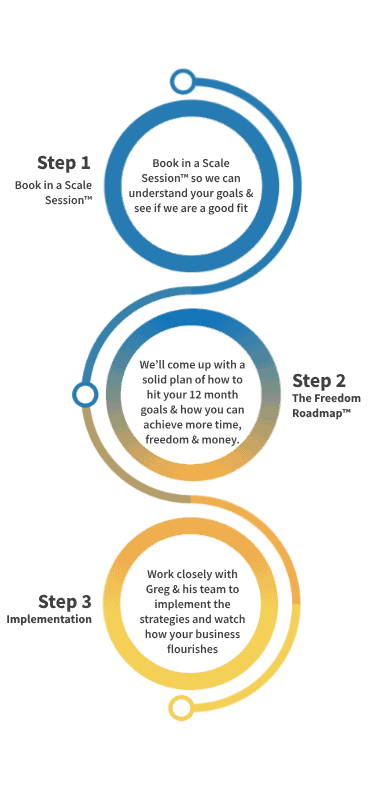
Greg Wilkes and Develop Coaching work with UK construction business owners who are serious about scaling past £1M with control, not chaos. We provide practical frameworks, direct accountability, and the systems you need to build a profitable, sustainable business that doesn’t depend on you firefighting every week.
Contact Develop Coaching to find out how we can help you put cash flow at the centre of your growth strategy.